Reachy Mini
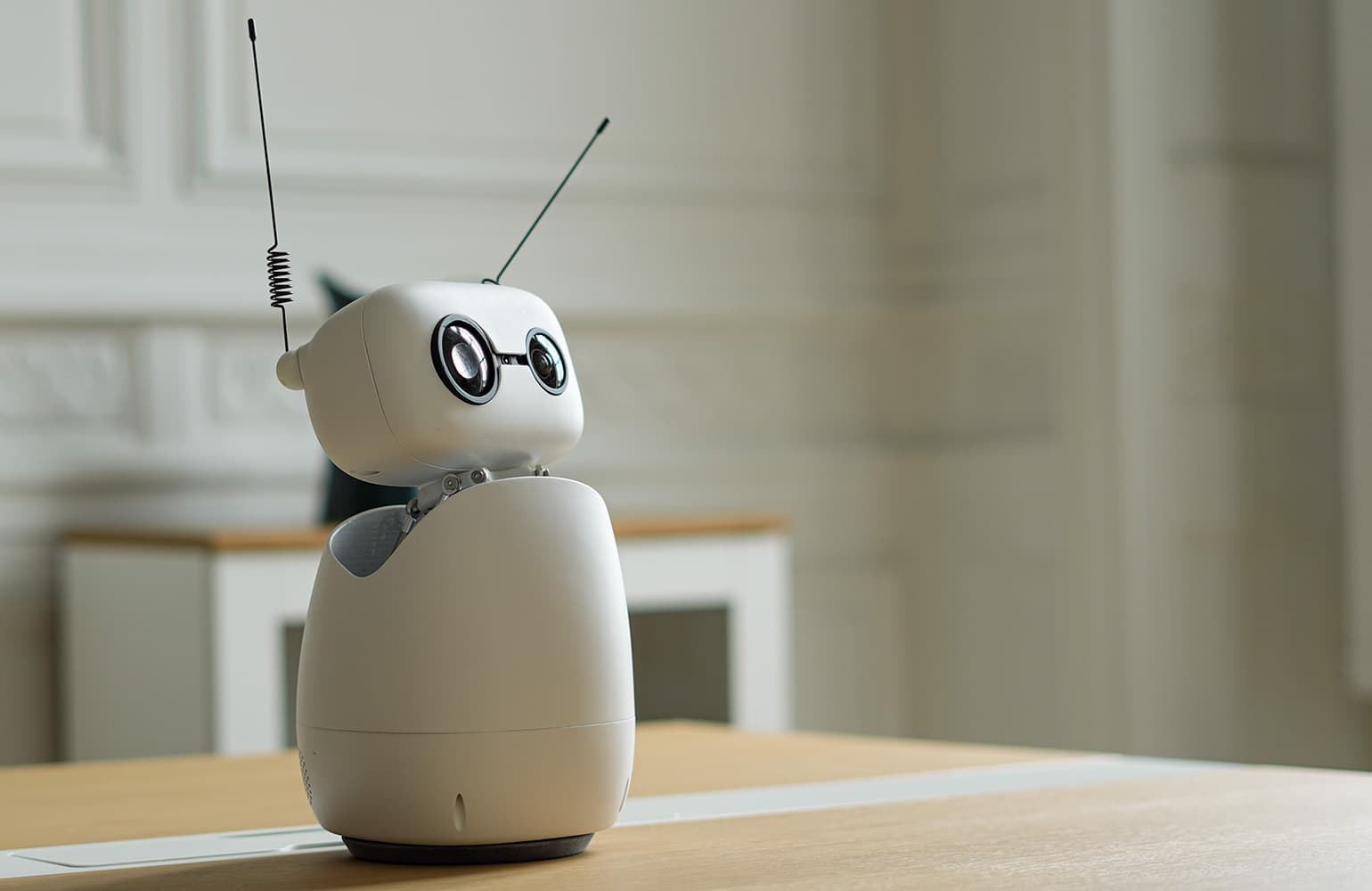
An open-source desktop robot by Pollen Robotics, built from the kit, running open-source LLM-powered conversations from Hugging Face. My way of staying close to AI as it moves from screens into the physical world.
Why
The current wave of AI is mostly happening in browser tabs. Reachy Mini is a small, deliberate bet that the interesting next step is putting these models into things that can see, listen, and move in a room with you.
I bought one because I'd rather understand embodied AI by living with it for a few months than read another thread about it. That's how I've learned every technology I now use professionally. Get hands on early, while it's still rough.
Building it
Reachy Mini ships as a kit. I assembled mine end-to-end. Servos, head, antennas, vision, the lot. It's an exercise in patience. Cable routing matters. Calibration matters. A single mis-seated connector means the cameras don't come up.
Building the hardware myself was the point. You learn an AI product differently when you've seen the inside of it.
Talking to it
Day-to-day I run the open-source conversation app from Hugging Face on it. Speech recognition, an LLM, and TTS, wired into Reachy's motion and gaze. The pleasant surprise is how much character even small head movements add to a conversation. It stops feeling like a smart speaker and starts feeling like something looking back at you.
It also makes the failure modes more vivid. Latency you wouldn't notice in a chat window is unmissable when a robot pauses before answering. Ambiguity that's fine on text feels evasive when it's coming out of something with a face.
What's next
I haven't written any of my own code against Reachy yet. That's the next step. The Pollen SDK is Python, so my plan is a small project that combines Reachy's vision and motion with a structured-output LLM call. Something like a desk assistant that can actually point at the thing it's talking about.
I'll write up what I learn here as it happens.
The reason this is on a portfolio. The people who will be most useful with AI over the next few years are the ones spending their own time inside it. Building it. Breaking it. Living with it. Not just reading about it. Reachy Mini is one of the small ways I keep doing that.